Residential Mold Remediation
Residential Mold Remediation in Oklahoma City That Gets Your Home Dry Again
Residential Mold Remediation in Oklahoma City starts with finding the moisture source, not just scrubbing the visible spots. Oklahoma Mold Force has handled residential mold removal in Oklahoma City since 2012, working in everything from Quail Creek ranches to Mesta Park bungalows. If you have seen discolored drywall, smelled that musty odor, or dealt with a leak, call (405) 309-1272 for a same-day inspection.
Service overview
What Residential Mold Remediation in Oklahoma City Actually Involves
Residential Mold Remediation in Oklahoma City is the process of locating mold growth inside a home, containing it, removing contaminated materials, and drying the structure so it cannot return. It is not a spray-and-wipe job. We use moisture meters, infrared thermal imaging cameras, and borescopes to find hidden mold behind drywall, under flooring, and inside wall cavities. Once we map the growth, we build polyethylene containment sheeting around the work zone, run HEPA air scrubbers and negative air machines, and remove mold-contaminated drywall and insulation.
Oklahoma City homes deal with humidity swings that push indoor moisture up fast. A roof leak in Lakehurst, a slab leak in Heritage Hills, or a slow supply-line drip behind a refrigerator can feed mold for weeks before you notice. That is why Oklahoma City residential mold remediation always starts with the water problem. We dry the structure to IICRC Applied Structural Drying standards, treat the framing with an antimicrobial coating, and verify clearance before we close anything back up. If you need residential mold remediation near me in Oklahoma City, that full sequence is what actually works.
Practical benefits
Why Oklahoma City Homeowners Call Us First
Mold spreads quietly. Every day you wait, the affected area grows and the repair bill climbs. Here is what you get when you put our team on it.
We Find the Source
Scrubbing visible mold without fixing the moisture is wasted money. Our technicians use Protimeter moisture meters and FLIR thermal cameras to trace water back to the leak, whether it is a failed supply line, a roof flashing, or crawl space humidity. We fix the cause, then remediate the growth. That is what separates real residential mold remediation from a surface wipe-down.
Containment That Protects Your Family
Loose mold spores travel through the air and settle on furniture, bedding, and HVAC returns. We seal the work zone with polyethylene containment sheeting and run Abatement Technologies HEPA air scrubbers with negative-air ducting. Airborne spore counts stay controlled while we work. Your kids and pets stay out of the affected rooms, and the rest of the house stays clean.
Clearance Testing Before We Leave
We do not just tell you it is clean. We prove it. After removal and drying, we run air sampling pumps and compare indoor spore counts against an outdoor baseline. If levels are not where they should be, we keep working. You get documentation of the clearance, which matters if you ever sell the house or file a claim.
Repairs Handled Under One Roof
Removing mold-contaminated drywall leaves holes. Our team handles the reconstruction too, from new mold-resistant drywall to texture and paint. You are not chasing a separate drywall guy after the remediation crew leaves. One company, one schedule, one warranty. That is how affordable home mold cleanup in Oklahoma City should work.
How service works
Our Residential Mold Remediation Process
Every home is different, but the sequence does not change. Here is exactly what happens from the first phone call to the final walkthrough.
STEP 01
Inspection and Moisture Mapping
We arrive with moisture meters, a hygrometer, and an infrared thermal imaging camera. We check the attic, crawl space, HVAC closet, and every wall that backs up to a plumbing fixture. You get a written scope with photos showing where the mold is and what is feeding it. Most inspections take 45 to 90 minutes.
Tools and methods
Tools and Methods We Use on Every Job
Protimeter Moisture Meters
Pin and pinless meters that measure moisture content in drywall, framing, and subflooring. We use them to map the wet zone and confirm when materials are dry enough to close up.
FLIR Infrared Thermal Imaging Cameras
Thermal cameras reveal temperature differences caused by hidden moisture behind walls and ceilings. They help us find mold growth without tearing out every surface.
Abatement Technologies HEPA Air Scrubbers
These units filter airborne spores down to 0.3 microns and run continuously during remediation. We pair them with negative air machines to keep containment under negative pressure.
Dri-Eaz and Phoenix Restoration Dehumidifiers
Low-grain refrigerant and desiccant dehumidifiers that pull moisture out of framing and subflooring. We monitor with a hygrometer and adjust until readings hit target.
XPOWER Air Movers
High-velocity fans that evaporate moisture from surfaces so dehumidifiers can capture it. Placement matters, and we reposition them daily based on readings.
Air Sampling Pumps
Used for pre-remediation baseline and post-remediation clearance testing. Lab results compare indoor spore counts to outdoor levels so you have proof the job is done.
Borescopes
A camera on a flexible rod that lets us look inside wall cavities and ductwork without cutting a large hole. We confirm mold growth behind finished surfaces before recommending removal.
IICRC S520 Mold Remediation Standard
The industry standard for assessing and remediating mold in buildings. We follow its containment, removal, and clearance protocols on every residential job. It is the benchmark insurance adjusters and home inspectors recognize.
IICRC Applied Structural Drying (ASD) Protocol
A documented drying process that uses daily moisture readings to track progress. We do not guess when a wall is dry. We measure, log it, and only close up when the numbers say it is safe.
Negative Air Pressure Containment
We seal the work zone and pull air through HEPA filters so spores cannot escape into clean rooms. This protects your furniture, your HVAC system, and the rest of your family's living space.
Antimicrobial Coating Application
After removal and HEPA vacuuming, we apply an antimicrobial coating to structural framing. It does not replace removal, but it adds a layer of protection against regrowth on surfaces that stay in place.
Where this service fits
When Oklahoma City Homeowners Need Mold Remediation
A supply line burst under the kitchen sink while the family was out of town for a week.
We extract standing water, remove the swollen cabinet base and mold-contaminated drywall, run Dri-Eaz dehumidifiers for four days, and treat the framing. Clearance testing confirms the air is clean before we rebuild the cabinet area. The kitchen is back to normal in eight days, and the homeowner has documentation for an insurance claim.
A homeowner in Crown Heights notices a musty smell in the hallway but cannot see any mold.
Our inspection finds elevated moisture behind the hallway drywall from a pinhole leak in a copper supply line. We open a small section, contain it, remove the mold-contaminated drywall, and dry the cavity. The leak is repaired, the mold is gone, and the wall is patched and painted in under a week.
After a spring storm, a homeowner finds water stains on the ceiling and mold starting around the attic access.
We inspect the roof decking, remove mold-contaminated insulation, HEPA vacuum the framing, and apply an antimicrobial coating. We also recommend a roofing repair to stop the leak source. Attic mold is cleared, air sampling passes, and the homeowner avoids a full attic tear-out down the road.
A rental property near Belle Isle has visible black mold in the bathroom after a tenant left the exhaust fan off for months.
We contain the bathroom, remove mold-contaminated drywall and vanity, treat the studs, and run a HEPA air scrubber. We also install a humidity-sensing exhaust fan so the problem does not repeat. The unit passes clearance in five days and is ready for the next tenant.
Local execution
How Residential Mold Remediation Runs in Oklahoma City
Quail Creek
Many homes here are 1970s and 1980s builds with original cast-iron drains and aging supply lines. Slow leaks behind cabinets and under slabs are common.
Heritage Hills
Historic homes with pier-and-beam foundations and original plaster walls. Crawl space moisture and attic mold from older roofing are frequent calls.
Mesta Park
1920s bungalows with minimal insulation and no modern vapor barriers. We see crawl space mold and wall cavity growth from seasonal humidity swings.
Lakehurst
Newer construction with tight building envelopes. HVAC-related moisture and condensation on cold ductwork are the most common mold sources.
Belle Isle
A mix of older and renovated homes near the river. High indoor humidity in summer leads to bathroom and closet mold if exhaust ventilation is weak.
Summer humidity above 60 percent for weeks
Indoor humidity climbs, and any cool surface like an AC duct or exterior wall becomes a condensation point. Mold can start on drywall and framing within days. We often add dehumidification to the remediation scope.
Spring storm season and roof leaks
Hail and wind-driven rain find weak flashing and damaged shingles. Water enters the attic, soaks insulation, and mold follows. We see a spike in attic mold calls from March through June.
Slab-on-grade construction with under-slab plumbing
A slab leak can feed mold for months before it surfaces. We use thermal imaging and moisture meters to trace the wet zone and confirm the source before we open the floor.
Freeze events that burst supply lines
When temperatures drop into the teens, pipes in exterior walls and attics freeze and split. The thaw releases water into walls and ceilings, and mold starts within 48 hours. We prioritize these calls.
Problems we solve
Mold Problems We Solve for Oklahoma City Homeowners
Mold shows up in different places for different reasons. Here are the situations we see most often in Oklahoma City homes and how we handle each one.
Hidden mold behind drywall after a slow leak
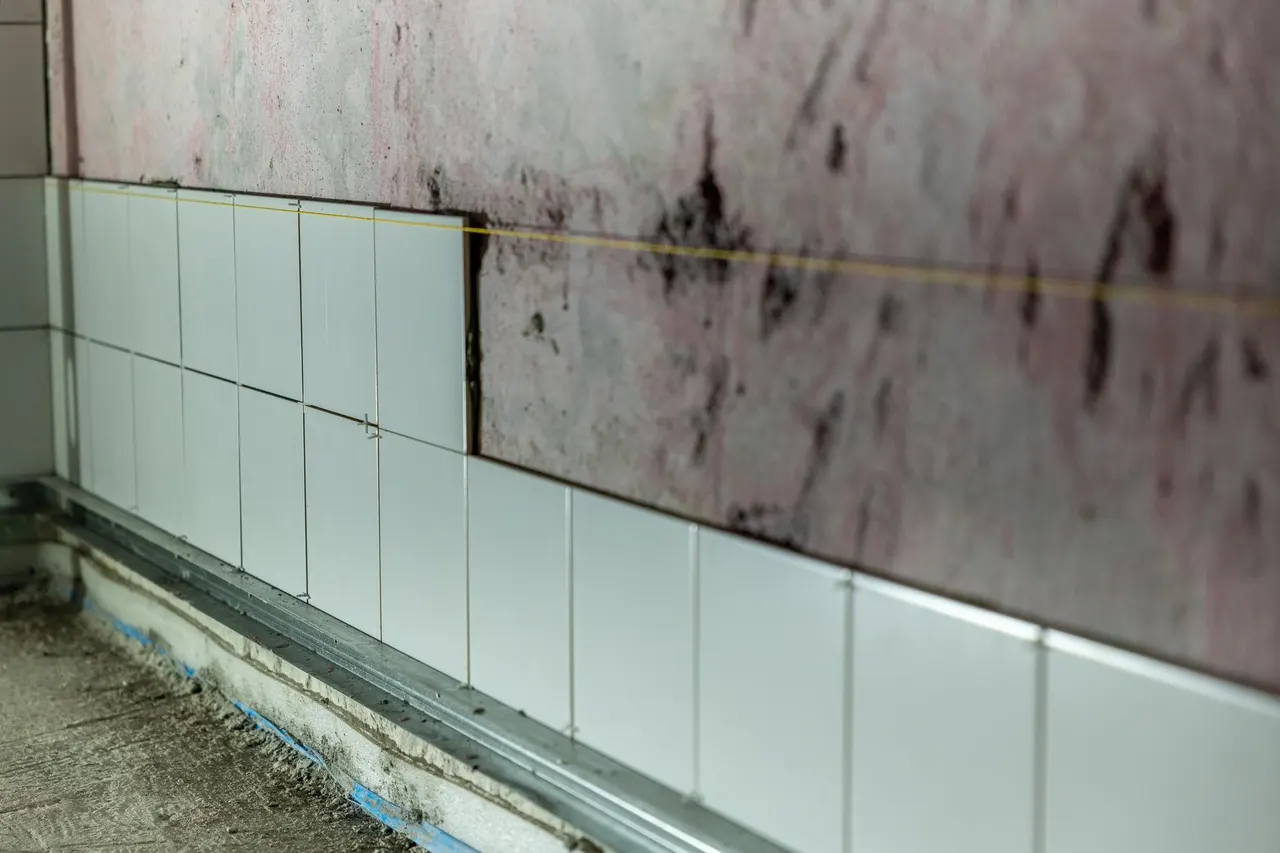
We use infrared thermal imaging cameras and borescopes to find the wet zone without tearing out every wall. Once mapped, we remove the contaminated materials, treat the framing, and dry the cavity to safe moisture levels before closing it up. By the time you smell it, mold has usually been growing for weeks. Drywall and insulation are contaminated, and the studs may be wet.
Attic mold from roof leaks or poor ventilation
We contain the attic access, remove mold-contaminated insulation, HEPA vacuum the decking, and apply an antimicrobial coating. If ventilation is the root cause, we recommend intake and exhaust corrections so it does not come back. Attic mold spreads across roof decking and insulation. It can push spores into living spaces through ceiling gaps and HVAC returns.
Crawl space mold from Oklahoma humidity
We remove affected material, treat the joists, and install a dehumidifier desiccant system or closed-cell spray foam to control moisture. Sealing the crawl space vents is often part of the fix. Oklahoma County crawl spaces stay damp most of the year. Mold grows on joists and subflooring, and the musty smell rises into the house.
Post-flood microbial growth
We extract water, remove saturated materials, and start structural drying immediately. If mold has already started, we shift into full remediation mode with containment and HEPA filtration. Emergency mold remediation for homes in Oklahoma City is what we do. After a storm or plumbing failure, standing water feeds mold within 24 to 48 hours. Waiting a week means a much bigger tear-out.

A practical standard for every visit.
Clear planningPrepared arrivalsCareful workLocal follow-through
Experience in the details
Mold Remediation Experience You Can Verify
Oklahoma Mold Force has been remediating homes in Oklahoma City since 2012. That is 14 years of working in Oklahoma County crawl spaces, attics, and slab-on-grade homes. Our technicians hold IICRC Applied Microbial Remediation Technician (AMRT) and Water Restoration Technician (WRT) certifications, and we follow EPA mold guidance on every project. We have handled everything from a single bathroom wall to full first-floor tear-outs after a supply line failure. When we walk your house, we have seen the problem before.
- IICRC AMRT and WRT certified technicians on every residential mold remediation crew
- 14 years serving Oklahoma City and Oklahoma County homeowners since 2012
- ACAC Council-certified Microbial Remediation Supervisor (CMRS) oversight on complex jobs
- EPA Renovation, Repair and Painting (RRP) certification for pre-1978 homes
- Full-time crews, not subcontractors, with OSHA respiratory protection compliance
Where we work
One local team. A lot of ground covered.
Quail CreekThe GreensHeritage HillsMesta ParkCrown HeightsEdgemere ParkBelle IsleLakehurstLincoln TerraceCleveland
Check my address Before the visit
Frequently Asked Questions About Residential Mold Remediation
Still wondering?(405) 309-1272
Most residential mold remediation jobs in Oklahoma City run $1,500 to $6,500 in 2026, depending on the square footage affected and whether reconstruction is needed. A single bathroom wall might land near the low end. A full first-floor tear-out after a slab leak can exceed $10,000. We give you a written scope with line-item pricing before any work starts, so there are no surprises.
Yes, in many cases. Most Oklahoma policies cover mold removal when it results from a sudden and accidental event like a burst pipe, appliance failure, or storm-driven roof leak. Long-term neglect or flooding is usually excluded unless you carry separate flood coverage. We document the cause and provide adjuster-ready scopes. Call your agent early, and we will work with them directly.
A typical Oklahoma City home takes five to ten days from containment to clearance. Removal usually runs one to three days. Structural drying adds two to five days because we wait for moisture readings to hit safe levels. Reconstruction, if needed, adds another two to four days. We give you a day-by-day schedule at the start so you can plan around it.
Oklahoma Mold Force provides residential mold removal in Oklahoma City and across Oklahoma County. We have been in business since 2012 and hold IICRC AMRT and WRT certifications. Our crews handle inspection, containment, removal, drying, clearance testing, and reconstruction. Call (405) 309-1272 to schedule an inspection. We serve ZIP codes including 73116, 73118, 73119, 73114, 73117, and 73099.
Keep exploring
Other Services Oklahoma City Homeowners Use With Remediation
Your next step is waiting
Get Residential Mold Remediation in Oklahoma City Started Today
Mold gets worse every day it sits. Call Oklahoma Mold Force at (405) 309-1272 for a same-day inspection. We are licensed, insured, and have served Oklahoma County since 2012. You get a written scope, honest pricing, and a workmanship warranty.
Start with the basics
Contact Oklahoma Mold Force
Call us at (405) 309-1272 or email info@oklahomamoldforce.com. We answer the phone 24/7 for emergencies and can usually schedule an inspection within 24 hours. If you are dealing with mold in Oklahoma City, reach out today and we will get you a clear plan and a written price.