HEPA Air Filtration
HEPA Air Filtration Oklahoma City OK for Mold and Dust Control
HEPA Air Filtration Oklahoma City OK captures airborne mold spores, drywall dust, and demolition debris before they spread through your home. We run negative air machines and portable HEPA scrubbers during every remediation job in Oklahoma County, from Mesta Park bungalows to Belle Isle two-stories. If you have had a roof leak, a slab leak, or a flooded crawl space, this is the step that keeps the rest of the house clean while we work.
Service overview
What HEPA Air Filtration Oklahoma City OK Actually Does
HEPA Air Filtration Oklahoma City OK is a mechanical filtration process that forces contaminated air through a filter media rated to capture 99.97 percent of particles at 0.3 microns, which includes mold spores, fine drywall dust, and insulation fibers. In practice, we place one or more HEPA air scrubbers in the work zone, seal the area with polyethylene containment sheeting, and create negative pressure so air flows into the containment instead of out into your living room. A negative air machine exhausts filtered air outside or into an adjacent space, and the scrubber recirculates and polishes the air inside the containment. We verify filter loading with a manometer and swap HEPA filter media on a set schedule, not when someone remembers.
Oklahoma City homeowners call us for this service after three things: a water heater failure that soaked a closet, a spring storm that pushed water under a door, or a slow HVAC condensate leak that fed hidden mold growth behind the drywall for months. Our climate swings from humid spring storms to dry, windy summers, and that cycle keeps Oklahoma County attics and crawl spaces damp long enough for Stachybotrys chartarum to take hold. If you are searching for HEPA air filtration service near me in Oklahoma City, the goal is simple: keep spores out of the air you breathe while the source gets removed.
Practical benefits
Why HEPA Filtration Matters During Cleanup
Airborne spores are the part of a mold problem you cannot see. Filtration is how we keep them from settling into carpet, upholstery, and HVAC ductwork while the physical removal happens.
Stops Spore Migration
A single disturbed patch of mold-contaminated drywall can release millions of spores. Negative air filtration for mold cleanup Oklahoma City keeps those spores inside the containment, so they do not settle on your furniture, curtains, or bedroom carpet. We maintain a pressure differential of at least 5 pascals across the barrier and check it twice per shift.
Protects Your HVAC System
If we skip filtration, spores get pulled into the return air and coat the evaporator coil. That turns a contained job into a duct cleaning job. We seal supply and return registers in the work zone before demolition starts, which keeps your HVAC-related moisture and mold problem from spreading to rooms that were clean.
Speeds Up Structural Drying
Filtered air moves well. We pair HEPA scrubbers with air movers and a desiccant dehumidifier so wet framing dries in three to five days instead of two weeks. Faster drying means less time in the sweet spot where post-flood microbial growth starts, and it means you get your kitchen or basement back sooner.
Gives You Documentation
We log filter changes, pressure readings, and daily moisture readings from a Protimeter and hygrometer. That record shows the job was run to IICRC standards, which matters if you file an insurance claim or sell the house. Air sampling pumps confirm spore counts before we pull the containment down.
How service works
How Our HEPA Filtration Process Runs
Every job follows the same sequence, whether it is a 40-square-foot bathroom or a 1,200-square-foot commercial space. Here is what you will see from the first call to the final air sample.
STEP 01
Inspection and Mapping
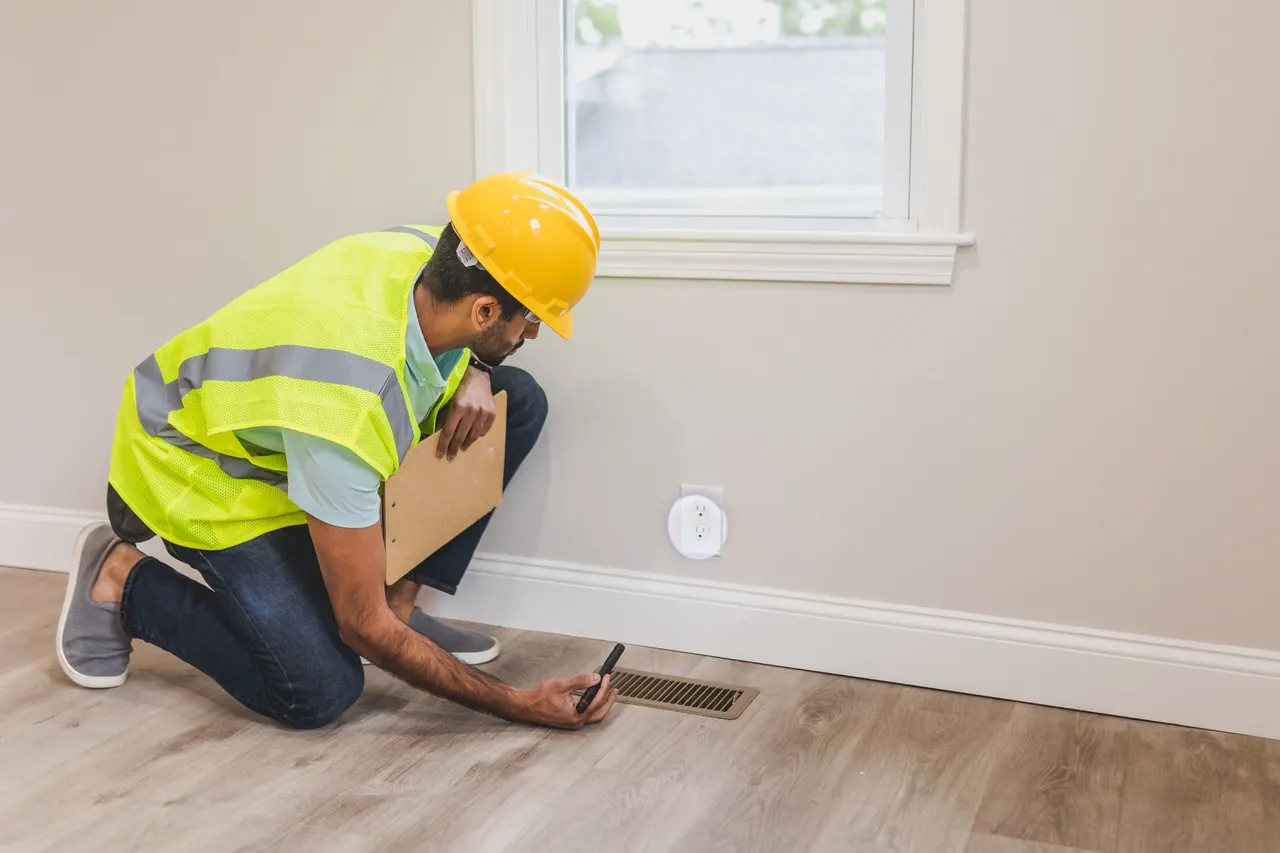
We start with a moisture meter, a hygrometer, and an infrared thermal imaging camera to find every wet pocket, not just the visible stain. A borescope goes into wall cavities where we suspect hidden mold growth. This walk-through takes 45 to 90 minutes, and you get a written scope the same day.
Tools and methods
Tools and Methods We Use
Dri-Eaz HEPA air scrubber
Recirculates and filters air inside the containment, capturing spores and fine dust at 99.97 percent efficiency at 0.3 microns.
XPOWER negative air machine
Creates negative pressure in the work zone and exhausts filtered air outside through negative-air ducting.
Abatement Technologies and OmniAire units
Larger-capacity scrubbers for commercial jobs and multi-room containments where a single unit cannot turn the air over fast enough.
Protimeter moisture meter and hygrometer
Measures moisture content in framing and relative humidity in the air so we know when drying is actually complete.
FLIR infrared thermal imaging camera
Finds cooler, wet pockets behind drywall and in ceiling cavities that a moisture meter alone would miss.
Air sampling pump
Draws measured air volumes for lab analysis so we can compare indoor and outdoor spore counts before tear-down.
HEPA vacuum
Removes settled spores and dust from exposed surfaces after demolition without re-releasing them into the air.
IICRC S520 remediation standard
We follow the IICRC S520 framework for containment, filtration, and clearance. That means defined pressure differentials, documented filter changes, and air sampling before the barrier comes down. It is the standard adjusters and home inspectors recognize.
Negative pressure containment
We maintain at least 5 pascals of negative pressure across the barrier, checked with a manometer twice per shift. Air flows into the work zone, gets filtered, and exhausts outside. If a seal fails, we rebuild it before work continues.
Air turnover sizing
We size HEPA scrubbers so the containment air turns over at least four times per hour. A 200-square-foot room with 8-foot ceilings needs roughly 6,400 cubic feet of filtered air per hour, which sets the unit count.
Clearance air sampling
Before tear-down, air sampling pumps run inside and outside the containment. We compare spore counts and only remove plastic when indoor levels match or beat outdoor baseline. If counts are high, scrubbers run another 24 to 48 hours.

Where this service fits
When You Need HEPA Air Filtration
A water heater let go in a hallway closet and soaked the carpet and baseboards overnight.
We extract the water, pull wet carpet and pad, and set containment with a HEPA scrubber and air movers. A moisture meter tracks the framing until it reads dry. Framing dries in three to four days, and no mold growth develops in the closet or the adjacent bedroom.
A spring storm pushed water under a back door in a Crown Heights home and soaked the hardwood.
We set a desiccant dehumidifier and HEPA filtration, then monitor the wood with a hygrometer daily. Flooring is saved when drying starts within 24 hours. Hardwood returns to normal moisture content in five days, and the homeowner avoids a full floor replacement.
A commercial tenant reported a musty smell in a 1,200-square-foot office suite after a roof leak.
We build a larger containment, run multiple OmniAire and Abatement Technologies scrubbers, and schedule demolition after business hours. Air sampling confirms clearance before staff return. The suite passes clearance in six days, and the tenant stays open in the unaffected half of the building.
A homeowner in Lakehurst found black mold on attic sheathing after a slow roof leak.
We contain the attic access, run negative air filtration for mold cleanup Oklahoma City, and remove contaminated sheathing. Closed-cell spray foam goes on the repaired deck. Attic spore counts drop below outdoor baseline in four days, and the repair stops the leak from returning.
Local execution
How HEPA Air Filtration Runs in Oklahoma City
Oklahoma City sits in a climate that swings hard. Spring brings heavy rain and hail that drives water under doors and through roof decks. Summer dries everything out and pushes attic temperatures past 140 degrees, which bakes moisture into the framing. Fall and winter bring the freeze-thaw cycle that cracks slabs and splits supply lines. That pattern is why we see so much attic mold from roof leaks and crawl space mold in older Oklahoma County neighborhoods. Building stock matters too. Homes in Heritage Hills and Mesta Park were built before 1940, often with pier-and-beam foundations, minimal vapor barriers, and original cast iron drains. Newer builds in Quail Creek and The Greens have tighter envelopes, which means a small leak stays hidden longer and feeds mold behind the drywall. We size containment and filtration to the actual cubic footage of the work zone, and we run HEPA air purification in Oklahoma City, Oklahoma on jobs from a single bathroom to a 1,200-square-foot office suite. If you are searching for air filtration during mold remediation in Oklahoma City, the sequence is the same every time: contain, filter, remove, verify.
Mesta Park
Pre-1940 pier-and-beam homes with original plumbing. Slow drain leaks under the floor are common, and crawl space filtration is often part of the job.
Quail Creek
Tighter modern construction hides small roof and HVAC leaks. We often find mold on attic sheathing before the homeowner notices a stain.
Crown Heights
Historic homes with mature trees. Roof damage from limbs is a recurring source of attic moisture and mold growth.
Belle Isle
Mix of older and renovated homes. Slab leaks and water heater failures drive most of our filtration calls here.
Lakehurst
Homes near the lake see higher ambient humidity. Crawl space vapor barriers and dehumidification are frequent add-ons.
Spring hail and wind-driven rain
Roof decks and door thresholds take on water fast. If the leak is not dried within 48 hours, mold growth starts on sheathing and framing. We run filtration during the dry-out to keep spores contained.
Attic temperatures above 140 degrees in summer
Heat bakes moisture into framing and drives it deeper. Drying takes longer, so we run HEPA scrubbers and dehumidifiers for an extra day or two to hit clearance.
Freeze-thaw slab movement in winter
Supply lines crack and leak under the slab. Water wicks up into walls and baseboards, and filtration is needed once demolition begins.
High humidity along the Canadian River corridor
Ambient humidity above 60 percent slows drying and keeps crawl spaces damp. We add a desiccant dehumidifier to the filtration setup on most of these jobs.
Problems we solve
Problems HEPA Filtration Solves in Oklahoma City
Most mold calls start with water, not with mold. Filtration is the part of the job that keeps a small moisture problem from becoming a whole-house air quality problem. These are the situations we see most often in Oklahoma County.
Airborne spores spreading during demolition
We build containment and start negative air machines before the first cut. Air flows into the work zone, gets filtered, and exhausts outside. Nothing crosses the barrier unfiltered, and we verify pressure twice per shift. Spores settle into carpet, upholstery, and ductwork, turning a one-room job into a multi-room cleanup that costs thousands more.
Hidden mold growth behind drywall
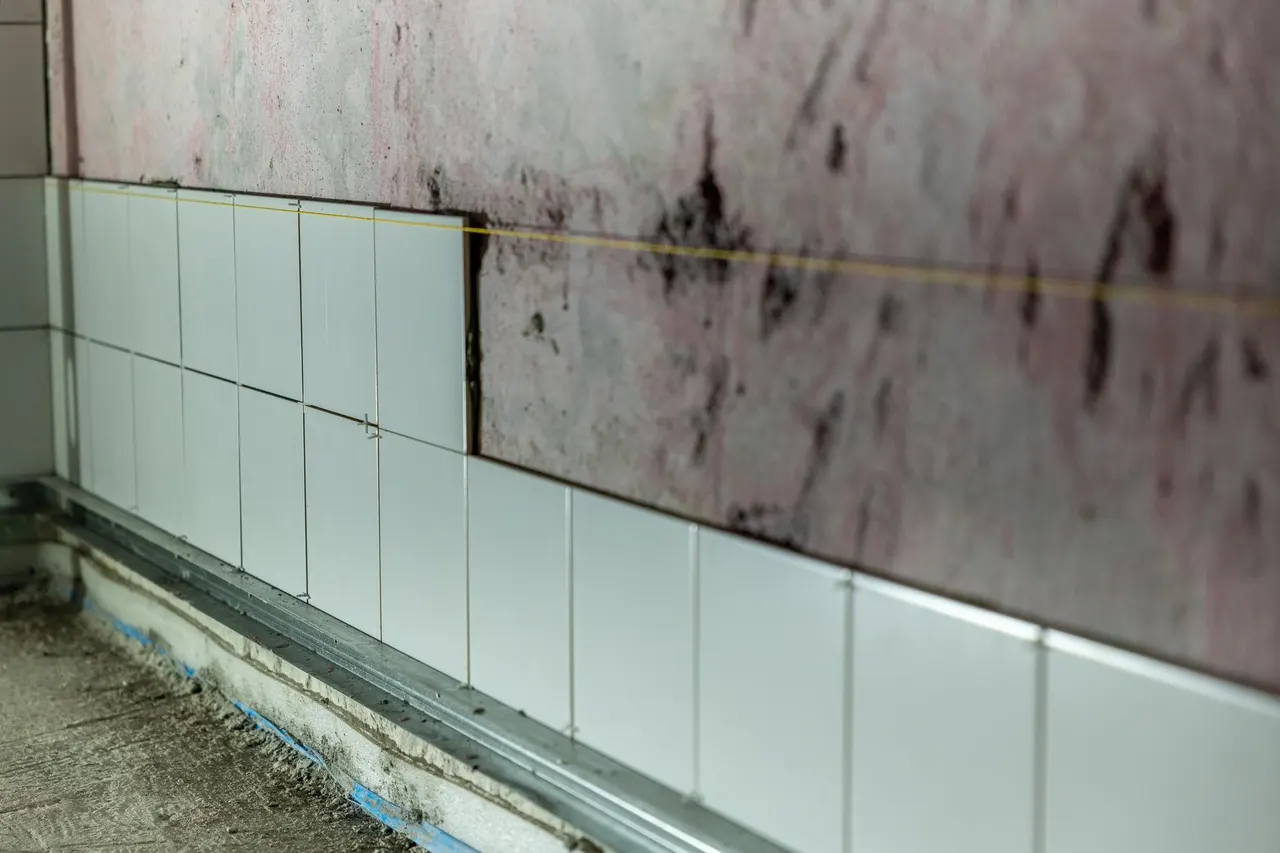
We use a borescope and infrared thermal imaging camera to find wet cavities, then open them inside containment. HEPA scrubbers run the whole time, so opening the wall does not release spores into the room. A slow HVAC condensate leak can feed mold inside a wall cavity for months before you smell it. By then the drywall and insulation are contaminated.
Crawl space mold after spring storms
We set containment at the crawl space access, run HEPA filtration and a desiccant dehumidifier, and treat the joists with an antimicrobial coating. Drying typically finishes in four to six days. Wet joists and insulation in a vented crawl space stay damp for weeks. Mold spreads along the wood and up into the floor system above.
Post-flood microbial growth in finished basements
We extract standing water, remove saturated material under negative pressure, and run HEPA scrubbers until air sampling shows clearance. Most finished basements clear in five to seven days. Water sitting behind baseboards and under carpet for 48 hours is enough to start microbial growth. Tearing it out without filtration spreads spores through the house.
A practical standard for every visit.
Clear planningPrepared arrivalsCareful workLocal follow-through
Experience in the details
Fourteen Years Running Filtration in Oklahoma
Oklahoma Mold Force has been in business since 2012, which makes 14 years of handling mold and moisture work in Oklahoma County. Our technicians hold IICRC Applied Microbial Remediation Technician (AMRT), IICRC Water Restoration Technician (WRT), and IICRC Applied Structural Drying (ASD) credentials, and our supervisors carry the ACAC Council-certified Microbial Remediation Supervisor (CMRS) designation. We follow EPA mold guidance on every project and hold EPA Renovation, Repair and Painting (RRP) certification for work in pre-1978 housing. That training is why we size equipment to the cubic footage of the containment instead of guessing.
- 14 years serving Oklahoma City, from Heritage Hills to Lakehurst
- IICRC AMRT, WRT, and ASD certified technicians on every mold job
- ACAC CMRS-certified supervisors overseeing containment and filtration
- EPA RRP certified for pre-1978 homes common in Mesta Park and Crown Heights
- OSHA respiratory protection program covering P100 respirator filters and fit testing
Where we work
One local team. A lot of ground covered.
Quail CreekThe GreensHeritage HillsMesta ParkCrown HeightsEdgemere ParkBelle IsleLakehurstLincoln TerraceCleveland
Check my address It keeps spores out of the air you are breathing while we tear out contaminated material. A HEPA scrubber captures 99.97 percent of particles at 0.3 microns, and a negative air machine keeps the work zone under pressure so air flows in, not out. Without filtration, a single demolition cut can spread spores through the whole house. We run both machines for the entire job.
Oklahoma Mold Force provides HEPA air purification in Oklahoma City, Oklahoma and across Oklahoma County, including Quail Creek, The Greens, Edgemere Park, and Lincoln Terrace. Call (405) 309-1272 and we will schedule an inspection, usually the same day. We serve ZIP codes 73099, 73114, 73116, 73117, 73118, and 73119.
Plan on 24 to 72 hours after the last demolition cut, and sometimes longer. We keep scrubbers running until air sampling pumps show indoor spore counts at or below outdoor baseline. On a typical 200-square-foot containment, that is two to three days of continuous runtime. We do not pull equipment early to save a day.
HEPA filtration physically traps particles in a filter media. Air purification is a broader term that can include filtration plus UV, ozone, or carbon stages. For mold work, filtration is the part that matters, because spores are particles. We size HEPA air scrubbers to the cubic footage of the containment so the air turns over at least four times per hour.
Keep exploring
Related Services
Your next step is waiting
Get HEPA Air Filtration Oklahoma City OK Started Today
One call gets a technician to your door with a moisture meter and a plan. We are licensed, insured, and have run filtration on Oklahoma County mold jobs since 2012. Call (405) 309-1272 and we will schedule your inspection, usually the same day.
Start with the basics
Contact Oklahoma Mold Force
Call us at (405) 309-1272 or email info@oklahomamoldforce.com. We answer the phone 24/7 for emergencies and can usually schedule an inspection within 24 hours. If you are dealing with mold in Oklahoma City, reach out today and we will get you a clear plan and a written price.